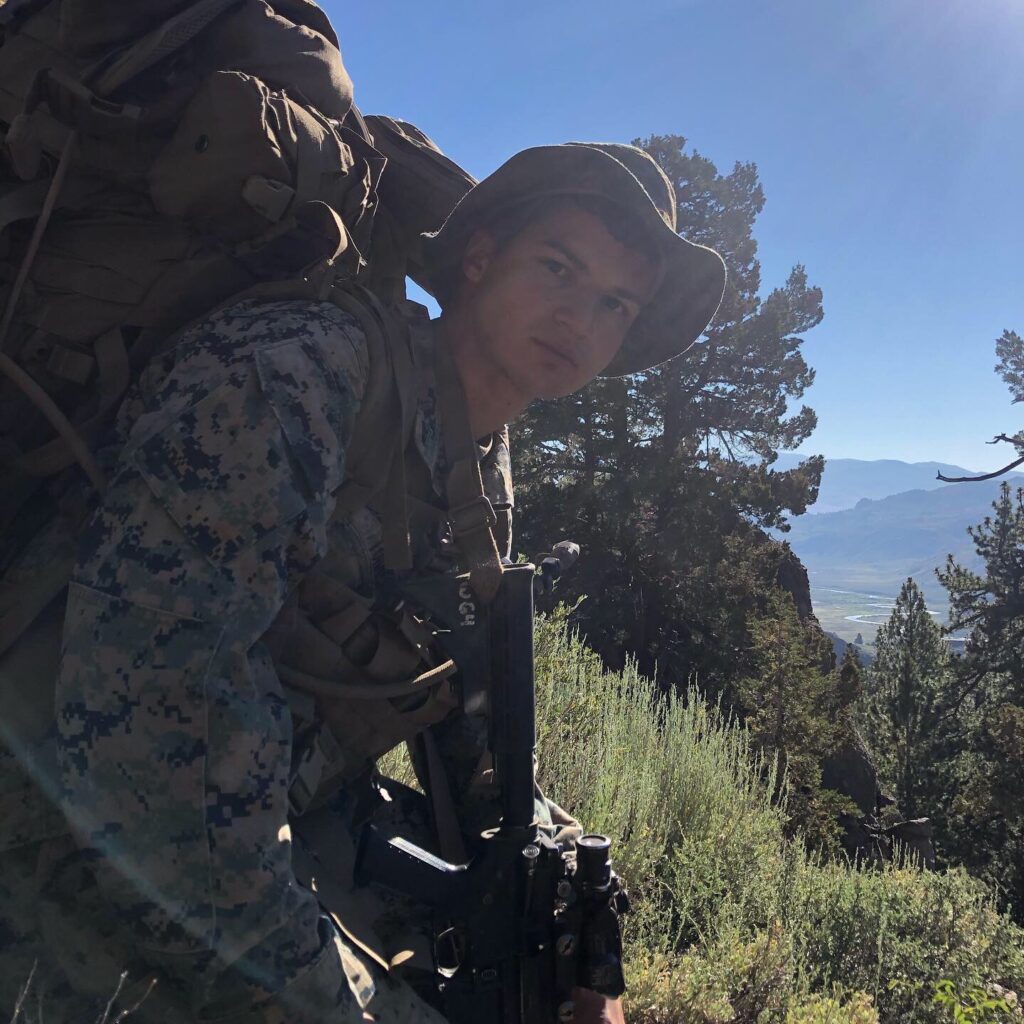
My name is Frank Torres. I am a rising senior at Harvard College studying Psychology. I enlisted in the U.S. Marine Corps infantry in 2016, shortly after high school. I enlisted with the purpose of contributing to society in an important way. I believe in the freedoms that people possess and want to fight to protect them. During my time in service, I gained more responsibility as a Sergeant of an infantry squad. This gave me the opportunity to train and lead younger Marines in meaningful ways. My main focus, besides being combat-ready, was influencing the young men to return as respectful, contributing members of society.
Traveling to other countries showed me how much worse conditions can be. In 2019, I served on the USNS Comfort. I provided security with my platoon so the Navy could give medical aid to citizens in less fortunate countries in South America. There I witnessed the suffering of people on a large scale who did not have access to adequate medical treatment.
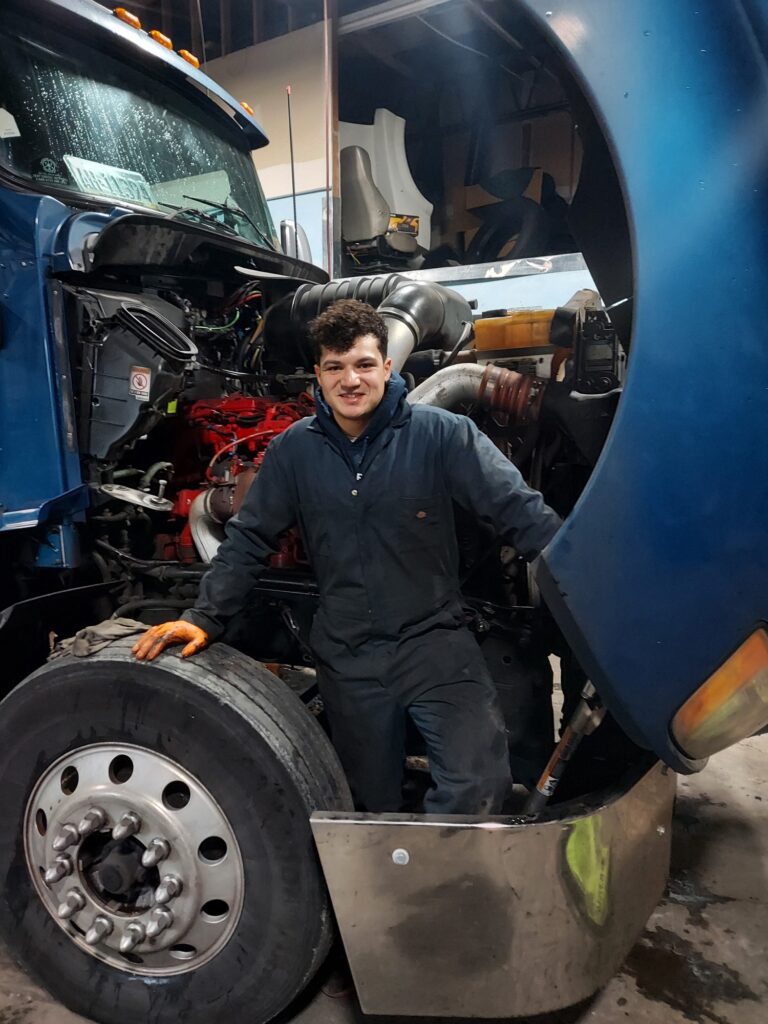
During my time in service, I used my resources to start a trucking company called Arcangel Trucking LLC. I was young, and at nineteen years old I purchased my first semi-truck. As an owner-operator, I obtained contracts with various carriers to haul loads to and from warehouses in multiple states. Arcangel was responsible for various cargo, from paper products and Amazon shipments to steel and metals on flatbed trailers. Upon completing my time in service, I bought a second unit to expand the company. I oversaw contracts, accounting, and truck maintenance.
I sold the company when I was accepted to Harvard College to focus on my academic journey. During my time at school, I have reflected on what would make me feel like contributing to society. Childhood issues with DCF led to my separation and later reunification with my parents. I plan to attend law school, with the intent of practicing family law to help others through stressful time periods of their lives.
I started interning for Alex Taubes on June 2, 2025. We started fast and went straight to court. I didn’t know what to expect. At that moment, I realized the severity of Alex’s work. The first case I observed was about a young man who made the mistake of underage driving under the influence, which ultimately led to his friend’s death in an accident. He reminded me of a time when one of my Marines received a DUI on a weekend. I recognized that I was responsible for influencing him to make better decisions for his future. The young man was clearly remorseful and worried about his future. It was evident that Alex had his best interest in mind and cared for his outcome when discussing his sentencing.
Later, a man who received a wrongful conviction for a murder came in to discuss seeking compensation after serving a long 23-year prison sentence. In the Marines, I learned what it means to stand up for others—especially those who are powerless or forgotten. That experience instilled in me a deep sense of responsibility and compassion for people who are mistreated or denied justice. Seeing this man, who lost decades of his life due to a grave mistake by the court system, reminded me why I chose to serve in the first place—and why I now want to pursue law. He deserves justice, and Alex is fighting to make that happen. This showed how an attorney can be the link between the client and the court to seek justice based on the grave mistakes made by the court system.
I have spent time reading past motions seeking sentence reduction for inmates based on good cause, which refers to an inmate’s behavior during their incarceration to justify an early release. This was extremely interesting because of the argument that incarceration is about accepting responsibility and rehabilitating so that they may reenter society. There are many variables to think about when reducing sentences, especially in severe cases such as murder. Someone loses their life, families are forever affected by the loss, and the perpetrator is incarcerated.
One case in particular was about a young man who murdered someone during a drug deal that went bad. At his sentence, he was given 60 years. The motion asked the court to reduce his sentence by 20 years. The defendant acquired his GED, worked various jobs in the prison that showcased his attitude, and planned to take paralegal courses. The court reduced his sentence to 48 years. This showed me that people do change after violent crimes and seek to better themselves after being sentenced, which is important because not everyone would react gracefully to a long prison sentence and may let it affect them to the point of continuous violent behavior during their incarceration. Behavior monitoring improves rehabilitation, pushing inmates to make positive changes in their lives. If an inmate is using their time to increase their knowledge and help others avoid the same consequences, it is an indication that they can be rewarded with the return of their freedom. This allows them to continue on making positive changes in their community, so that overall crime lowers.
Alex’s work goes beyond sentence modification. He also protects citizens whose rights have been violated. I sat in on a police misconduct deposition where a government official assaulted a citizen on public property. Alex cross-examined the witness in under five minutes, using facts from the recorded incident and referencing the law to show how the citizen’s rights were ignored. He obtained clear, credible testimony from the witness.
I have also seen how Alex helps people in his community face stressful times. A man came in for an intake because he was fired from a job where he had worked for almost 40 years. His employer assumed he stole an item left behind by a customer and fired him without proof. Alex calmly explained his legal options, which clearly eased the man’s concern. The man seemed visibly relieved to know someone was in his corner.
In just one week, I was able to observe how well Alex prepares and how deeply he cares for his clients. He listens closely, understands the facts, and enters court confident and clear. I am excited to learn more from him during my time here as an intern.
If you want to hire Attorney Taubes, email him at alextt@gmail.com or call or text him at (203) 909-0048.